Building the athlete experience from the ground up.
A 12-week programme for 50 elite athletes, selected by PUMA and built on peakst8.
A partnership that became a pilot.
PUMA approached peakst8 with Project3, a programme built around a select group of elite athletes. Rather than simply host it, we proposed using Project3 as the first real-world pilot of an athlete platform we had long wanted to build.
There was no existing programme to design around. Project3 itself had to be built from scratch, from how athletes applied and were selected to the 12 weeks they would spend on the platform.
Selects the athletes.
Builds the programme and the product.
Training ran on the module and backend of Yoska, which peakst8 had acquired, integrated with a new peakst8 frontend.
Room for 50, open to everyone.
Anyone could apply. A 30-question application with scoring logic narrowed the pool, and PUMA reviewed the qualifying candidates to make the final selection.
- 1,000+ applicants01
- 30-question application & scoring02
- PUMA review03
- 50 athletes04
Designing for athletes who already know how to train.
These were elite athletes. They didn’t need a beginner’s plan or a daily workout telling them what to do, and a product that prescribed training would have added little.
The opportunity was to build a competitive environment around the training they already did.
Project3 became the first real-world pilot of that idea.
Not another event listing.
How do you make an athlete stop, understand Project3 and want to enter the programme, without it feeling like just another event?
Project3 isn’t a separate app or a standalone PUMA product. Athletes find it inside peakst8, and enter it as a destination within the platform.
Fine for a run club meetup. Too flat for a 12-week programme athletes have to compete to get into.
A destination with its own theme, hierarchy and motion, paced as a narrative rather than a spec sheet.
PUMA’s space, peakst8’s product
Theme, imagery and tone belong to PUMA. Navigation, components and account stay peakst8. The partner gets a strong presence; the athlete never leaves the ecosystem.
Richness matched to the stakes
A selective programme asks more of an athlete than a weekend session. The microsite gives it the space to earn that commitment before the athlete applies.
One architecture, many experiences
The goal wasn’t a one-off PUMA app. The same event structure lets future programmes and partners bring their own branded experience into peakst8.
peakst8 is the platform. Project3 is an experience within it.
Next — Apply Now↓Designed around the athlete, not the data requirements.
To qualify applicants, the application had to collect a significant amount of information, around 30 questions. The athlete didn’t need to experience that complexity all at once, so we kept it behind the experience.
Answers fed a scoring logic that identified the qualifying pool; PUMA made the final selection.
Group and section
Related questions were organised into short chapters so the application felt like a few clear stages rather than one long form.
Cut what isn’t needed
We removed questions that didn’t meaningfully contribute to qualification.
Less on screen at once
The experience kept each step focused instead of presenting the full complexity of the application at once.
Relevant by logic
Conditional logic ensured applicants only saw questions relevant to them.
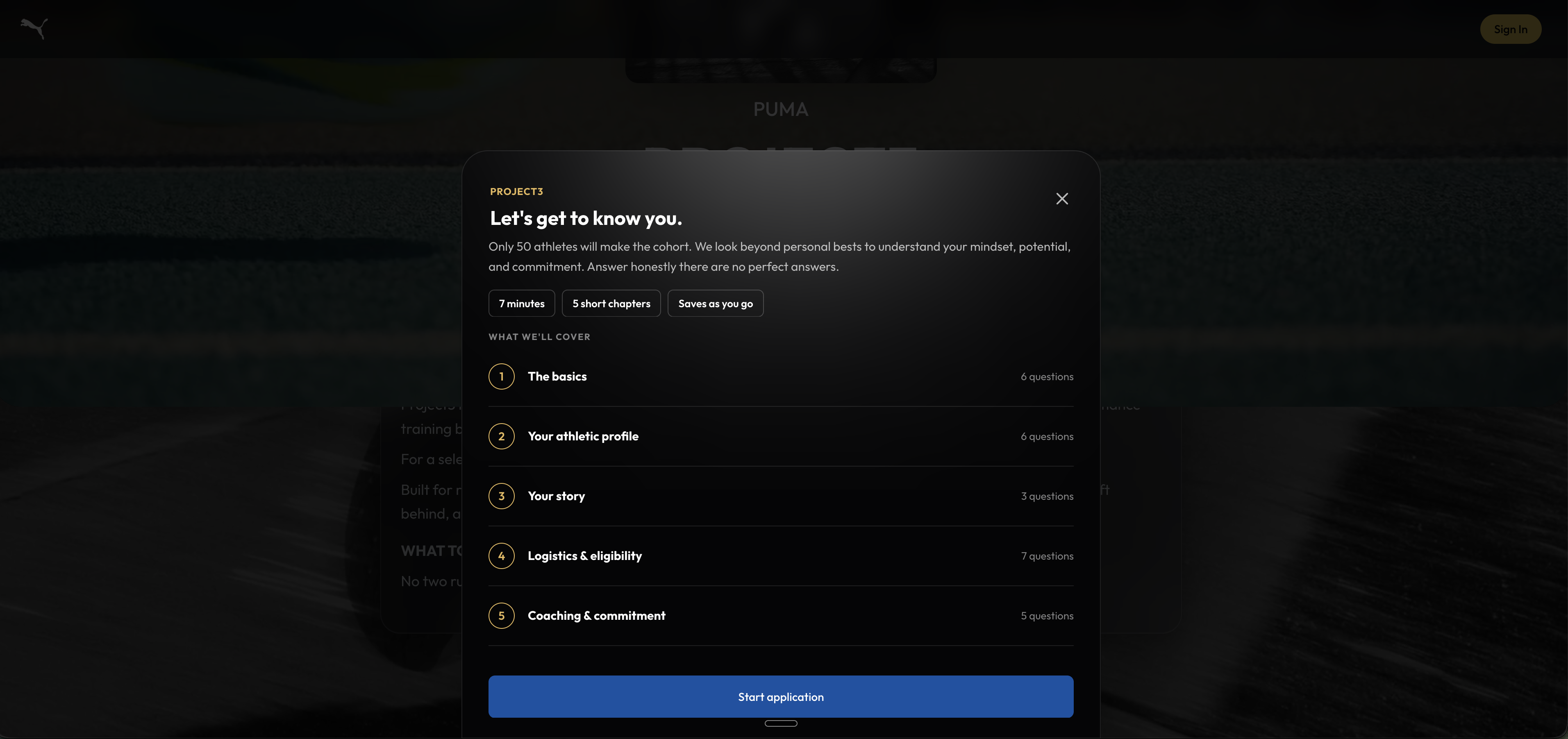
The 50 athletes selected would go on to enter the full peakst8 athlete experience.
Next — The athlete experience↓An environment around their training.
What does an elite athlete actually need from the product once they’ve been selected?
Not another app telling them what workout to do. They already had routines, coaches and ways of preparing. They needed a place where performance, progress and competition became visible.
Training is an important underlying capability, but the product is closer to an athlete ecosystem than a fitness app. Project3 is its first major expression.
A personal command centre, not a feed.
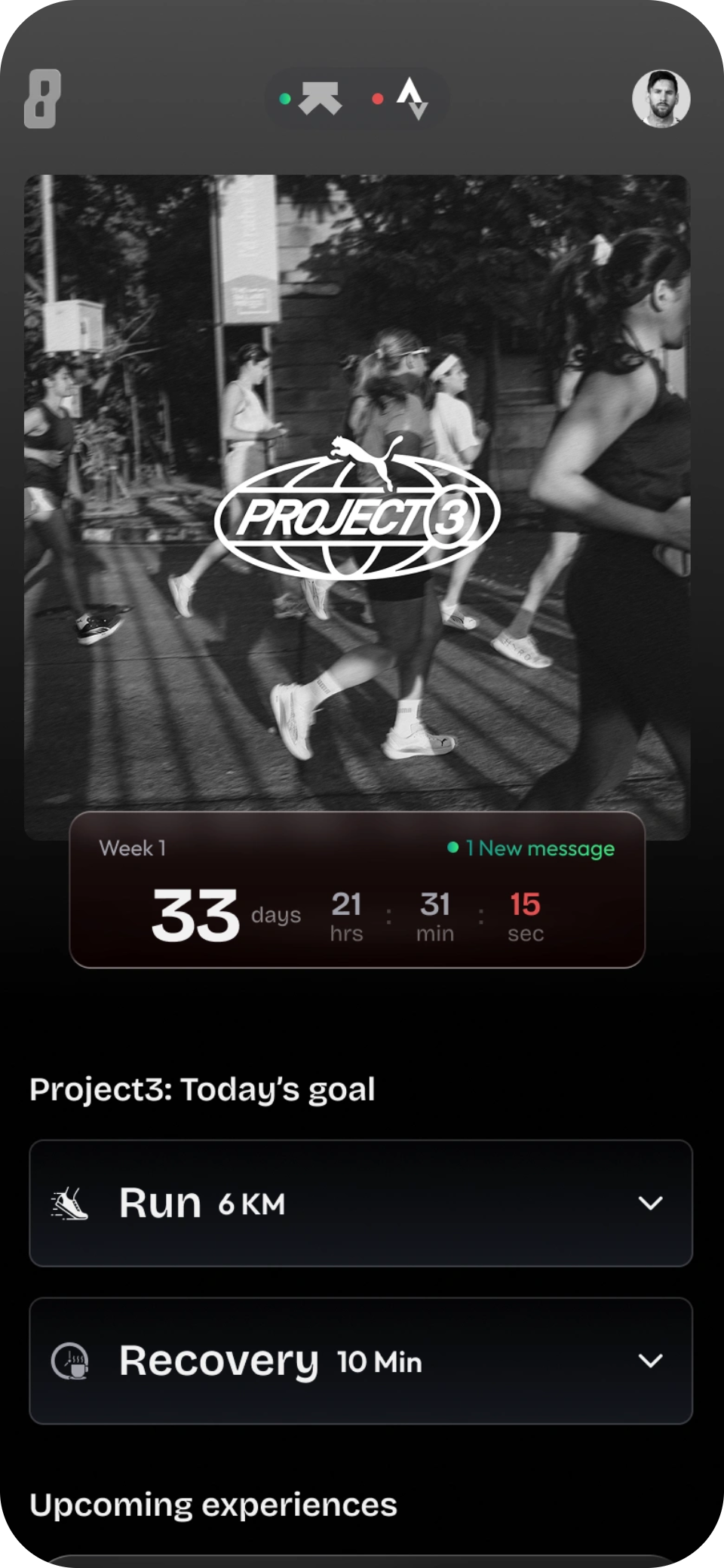
Home is built around three questions an athlete brings to it every day.
What am I doing now?
The active experience and where the athlete is in it: Project3’s current week and countdown, and anything that needs attention.
What should I do next?
Today’s goal from the Project3 programme, such as a 6 km run and 10 minutes of recovery.
What’s coming up?
Upcoming experiences, like PUMA | Full Circle, that the athlete can step into next.
Four areas, each with one job.
Training isn’t a separate destination. The Project3 programme surfaces as today’s goal on Home, so the rest of the product can focus on everything around it.
Active experiences, today’s goal and what’s coming up.
Events, clubs and experiences across peakst8.
Performance, growth and competition over time.
The athlete’s record and presence on the platform.
a PUMA app.
a peakst8 athlete platform that could host PUMA today and other experiences tomorrow.
Project3 had to feel branded and special enough for PUMA, while everything underneath stayed reusable. One athlete, one app, whatever they take part in:
With the structure in place, the next question was how to make competition and progress feel meaningful.
Next — Competition & progress↓Competition around what already matters.
If these athletes already know how to train, what keeps them engaged with the programme?
Not more reminders or more prescribed workouts. Competition is already part of an elite athlete’s world, so we designed around it: visible progress, a cohort to measure against, and reasons to come back each week.
Performance, made visible across the cohort.
Athletes earn points by completing their goals, taking on challenges and participating in programme activities. The leaderboard turns those points into a clear picture of where each athlete stands among the 50.
Shorter feedback loops inside 12 weeks.
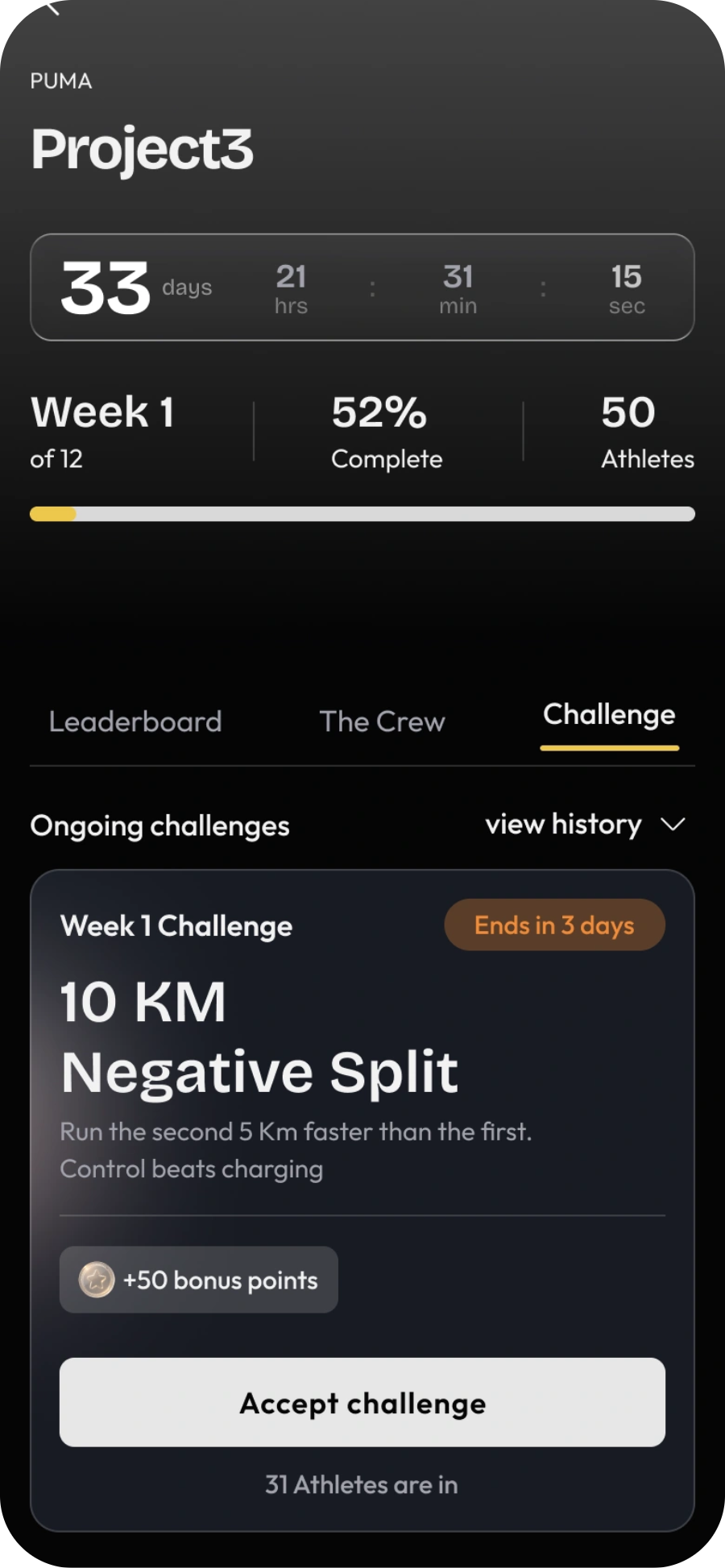
Twelve weeks is a long horizon. Weekly challenges add smaller, time-bound goals on top of an athlete’s primary training, each with a clear finish line and a reason to act now.
Progress should feel tangible.
Completion alone says little. The product answers four questions an athlete actually asks of their programme.
A fresh starting line, every season.
A permanent leaderboard gets harder to enter the longer it runs. Newer athletes end up chasing a hierarchy that has been accumulating indefinitely.
Seasons make competition time-bound. Everyone competes within a defined period, and the next season is another real chance to compete.
The individual athlete has their own progress. Crew creates a social layer around it.
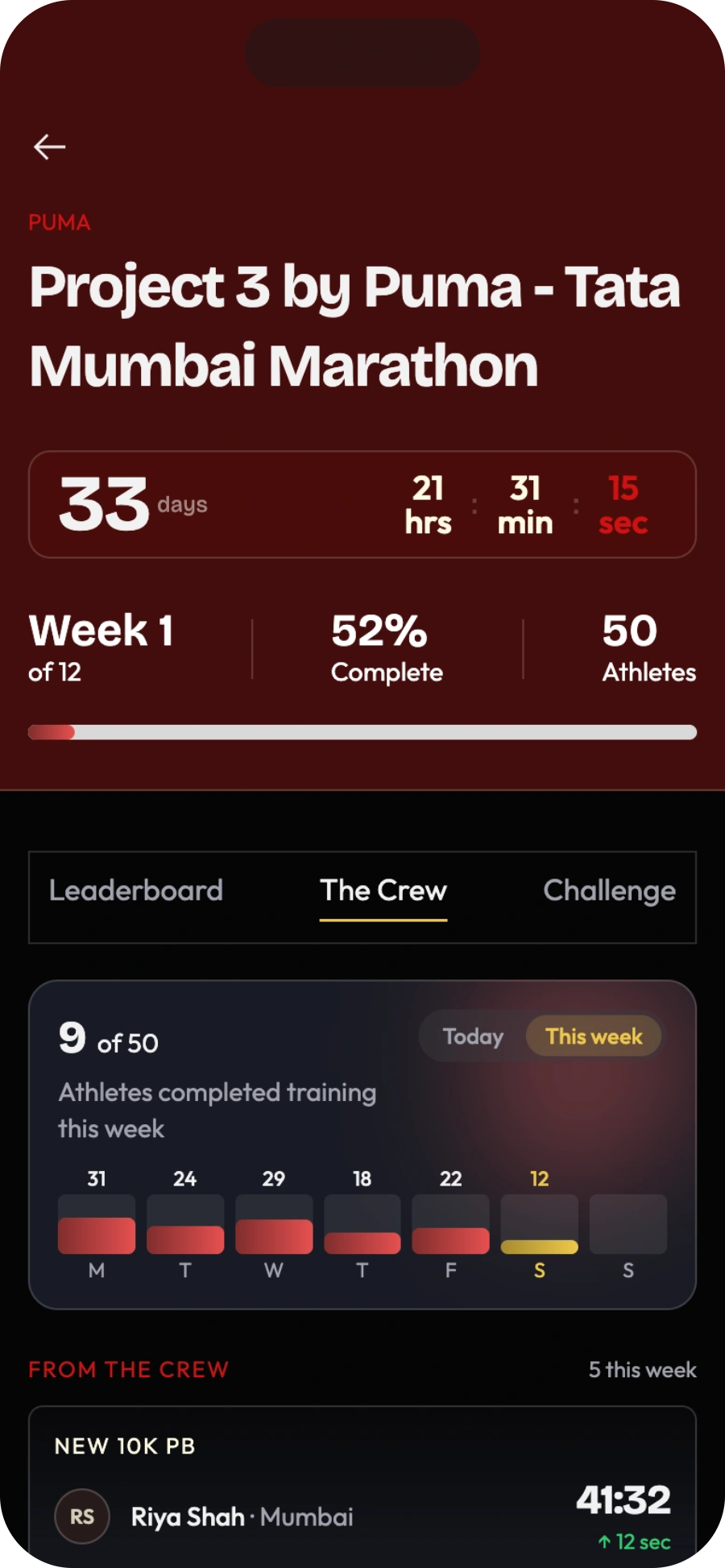
Alongside the leaderboard and challenges, The Crew shows how the cohort is moving together, such as how many of the 50 completed training this week, challenges completed and personal bests.
Goals feed challenges, challenges feed points, and points make progress something athletes can see and compete on.
Next — The Crew↓More than an account page.
If competition shows how athletes perform, how do we help them see and share who they are?
The Athlete Profile was designed as a representation of the athlete’s journey, not a settings screen.
Own your journey
Sporting background, achievements and performance in one place, so athletes can understand and represent their own history.
Know who you’re competing alongside
Project3 is a community of athletes. The profile lets them discover each other and answer:
Race history, as something you can hold.
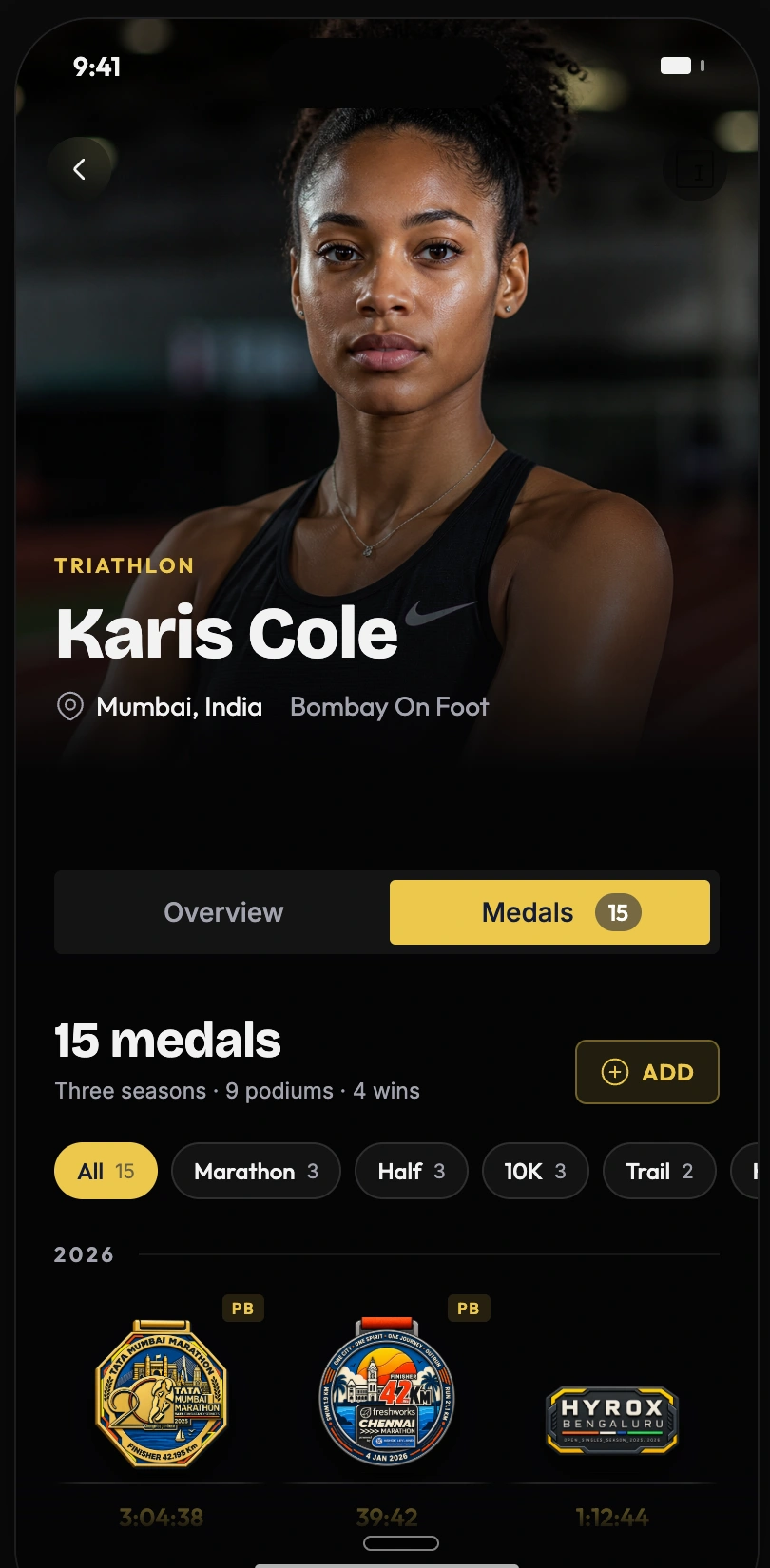
The application already asked athletes about the races they had completed, such as half and full marathons. We used those references to build a digital medal collection on each profile, a far more tangible record than a text list of results.
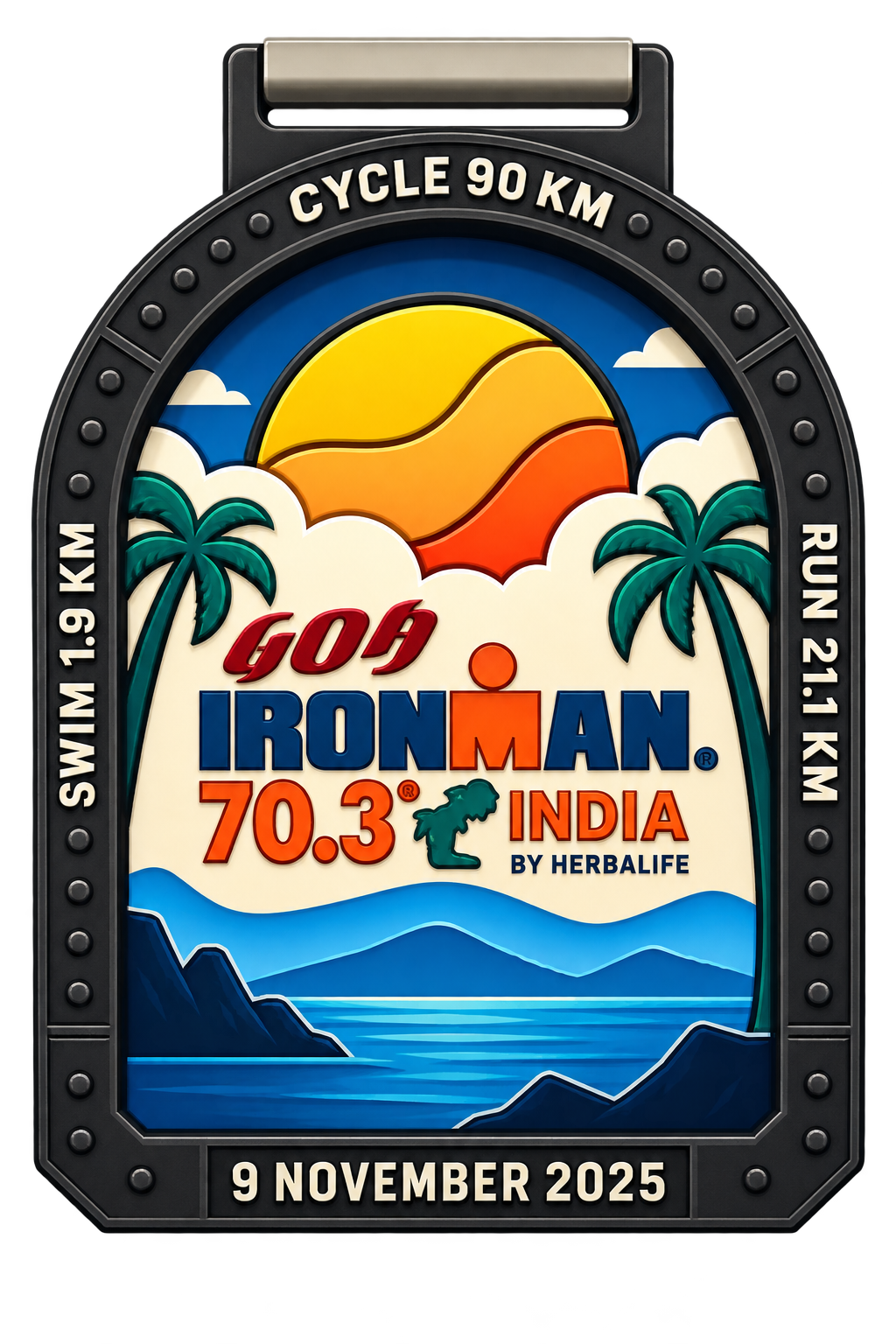


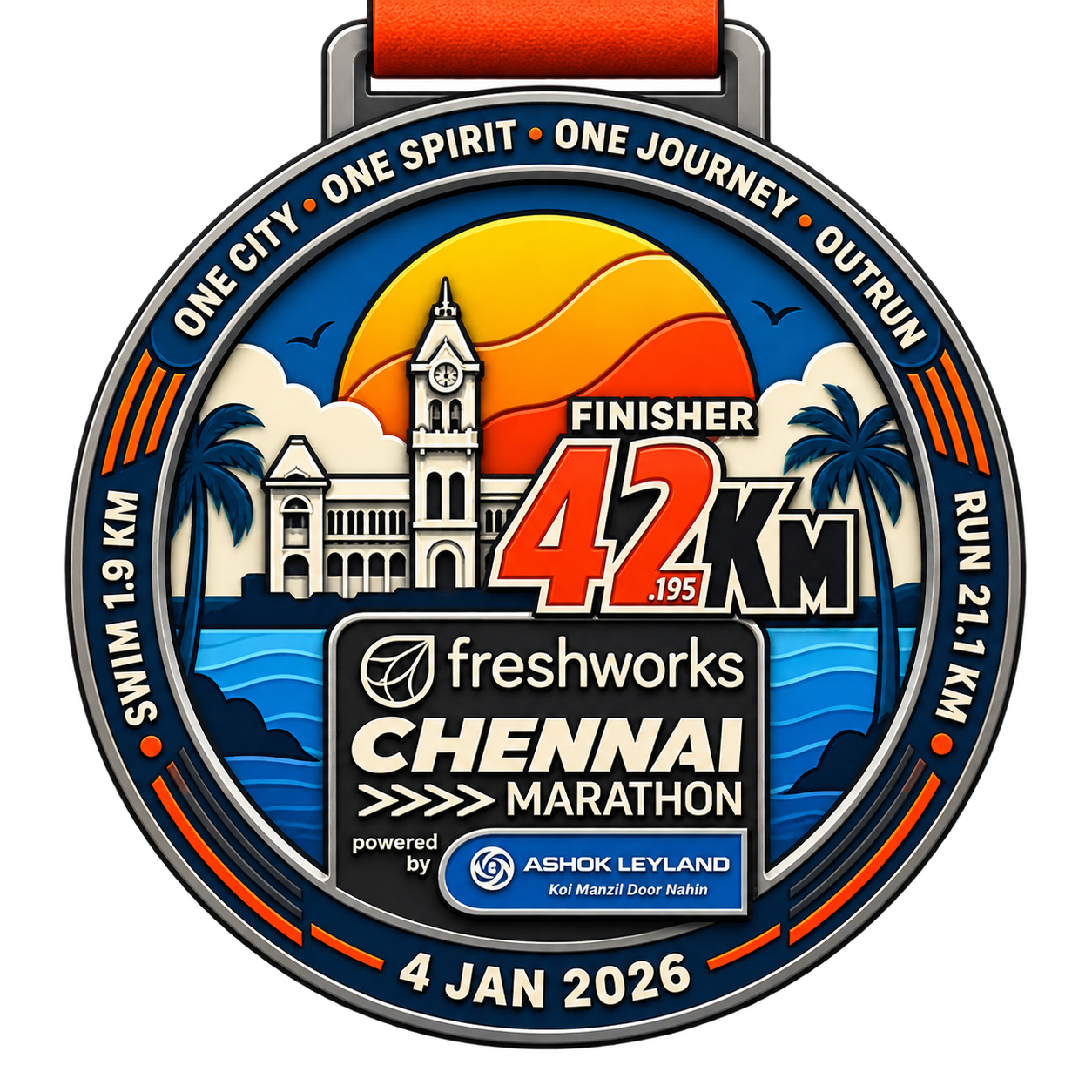
Medals from the Project3 medal wall.
Performance is data.
Achievements are identity.
The profile connects the two. Athletes see their own history, and others understand who they’re competing alongside, which is part of what makes peakst8 an athlete ecosystem rather than a training product.
Designing this much, this richly, depended on a different way of working.
Next — AI in the process↓AI as a design multiplier.
AI became part of how I designed Project3, from product thinking through prototyping, interaction, motion and visual execution.
The product decisions, direction, evaluation and final output stayed with me. What AI changed was the distance between an idea and something I could test.
Explore ideas, challenge assumptions and structure flows before committing. A thinking partner, not the decision-maker.
ChatGPT · ClaudeTurn a design idea straight into a working HTML/CSS prototype: layout, states and responsive behaviour.
ClaudeAsk “what happens when the athlete taps this?” while the idea is still cheap to change.
ClaudePrototype transitions and micro-interactions early, then refine them through iteration.
ClaudeExplore rich visual assets, like medals and icons, without a specialised production pipeline.
ChatGPTThe cost of exploration dropped.
Speed was a side effect. The bigger change was being able to try more ideas, kill weak ones earlier and spend the saved effort refining the ones worth keeping.
Motion stopped being something saved for the end. When a transition costs little to try, it can shape the design from the start.
3D assets without a 3D pipeline
The medals and the onboarding icons for Strava, Ultrahuman and the profile photo were explored with ChatGPT image generation. I set the direction, judged the outputs and chose what fit the product; the result is visual richness that would usually need a specialised 3D workflow.



Edge cases, explored as states
Product states were worked through in Claude. Generating several responses to the same state made it easier to compare them and pick the behaviour that was clearest for the athlete.
AI generated possibilities.
I made the decisions.
AI increased how much I could explore. It didn’t decide what the product should be. That still took:
Idea, prototype, test, refine, ship, with far less distance between each step.
Next — Designing for scale↓A platform, not a one-off.
We weren’t building a one-off PUMA experience. We were using Project3 to build a reusable athlete platform.
A standalone branded app that works for one programme and one partner, and has to be rebuilt for the next.
The athlete doesn’t need a new app for each programme. They stay in the same ecosystem.
Two layers: the athlete platform, and the experiences inside it.
PUMA gets its own branded presence, programme and competition. Underneath, the platform stays peakst8, so everything built for Project3 can become patterns for what comes next.
The Project3 microsite from Section 02 is the first example of a partner experience in this model. This is the product direction, not a claim that every future capability already exists.
Both a programme and a product test.
The 50-athlete cohort was useful beyond the programme itself: a chance to validate the model with real athletes in a real programme.
Athletes build a persistent identity and history on peakst8 while moving between experiences. That is the larger product opportunity Project3 opened up.
PUMA needed Project3. Project3 became the catalyst for the platform.
Next — Outcome & reflection↓From Project3 to the athlete platform.
PUMA came to peakst8 with Project3. What started as a 50-athlete programme to host became the reason to build the athlete product we had wanted to create.
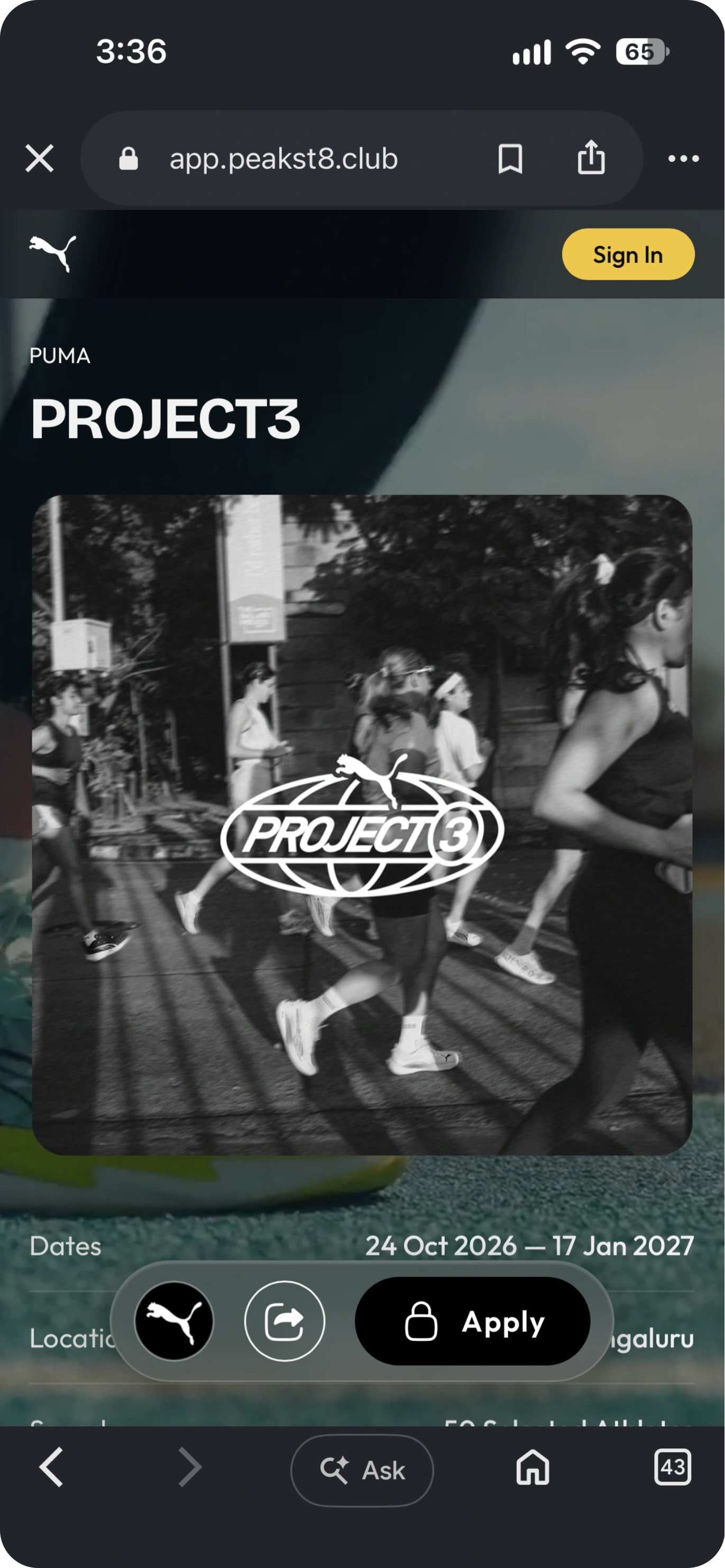
Underneath it: the supporting states and interactions, and an AI-assisted workflow for prototyping and execution.
Across the product, not only the interface.
- Working with PUMA stakeholders
- Understanding programme requirements
- Shaping the athlete journey
- Structuring the application
- Product thinking & information architecture
- UX/UI design
- Interaction & motion design
- Prototyping
- AI-assisted implementation & exploration
- 3D & visual experimentation
- Designing the broader product system
The Project3 experience inside peakst8, and the platform architecture it sits on.
How the model holds up is being tested through the pilot with the 50 athletes.
Project3 wasn’t just an event we built. It became the first real-world test of what peakst8 could become.
Project3 started with 50 athletes.
The product was designed for many more.